

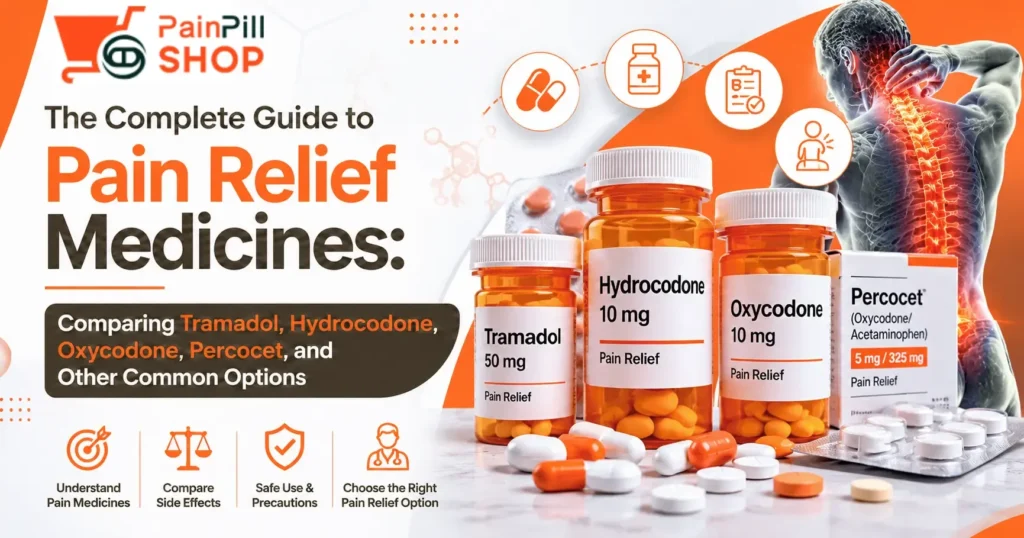
Pain may affect nearly every aspect of daily life. Many look for effective Pain Relief Medicines to feel better and keep up their routine, be it after a surgery or for long-term ailments like back pain, nerve pain, or accident pain.
Today, dozens of medications are used for pain management. For those new to using them, it may be difficult to choose between alternatives such as Tramadol, Hydrocodone,
Oxycodone, and Percocet. The medications function in different ways and may be recommended for different levels of pain and the aims of therapy.
This guide explains some of the most common Pain Relief Medicines, how they are used, and the factors patients often consider when discussing treatment options with healthcare professionals.
What Are Pain Relief Medicines?
Pain Relief Medicines are medications used to reduce or manage pain caused by injuries, surgeries, chronic conditions, nerve disorders, or inflammation.
The following are typically the categories of pain treatments:
- Mild pain relief drugs
- Anti-inflammatory drugs
- Treatments for nerve pains
- Pain medication ( moderate to severe )
- Extended-release and immediate-release formulations
- Prescription medication options for pain management
The type of medicine chosen often depends on:
- Pain intensity
- Duration of symptoms
- Medical history
- Existing health conditions
- Previous medication response
Not every pain medicine works the same way. Some focus on short-term relief, while others are designed for ongoing pain management.
Tramadol: A Common Option for Moderate Pain
Tramadol is frequently discussed among Pain Relief Medicines because it is often considered for moderate pain management.
It works by affecting how the body processes pain signals. Tramadol may be used in situations involving:
- Post-surgical discomfort
- Musculoskeletal pain
- Joint-related pain
- Certain chronic pain conditions
One reason Tramadol remains popular is its flexibility in treatment plans. It is available in:
Immediate-Release Tramadol
Designed for shorter-term pain control and quicker action.
Extended-Release Tramadol
Made for people who require longer-lasting symptom alleviation.
Patients may prefer the quick-release or extended-release formulation if they desire longer coverage during the day.
Benefits Often Associated with Tramadol
- Multiple dosage options
- Used in different pain categories
- Available in short and long-acting forms
- Frequently discussed for chronic pain support
Therapy needs vary, so it’s always vital to seek medical counsel before starting or altering drugs.
Hydrocodone: Used for Moderate to Severe Pain
Hydrocodone is another well-known name among prescription Pain Relief Medicines.
It is commonly considered when pain becomes stronger or when standard therapies provide limited relief.
Hydrocodone may be discussed in cases involving:
- Injury recovery
- Surgical procedures
- Severe musculoskeletal pain
- Certain chronic pain situations
Sometimes, hydrocodone is mixed with other substances to assist in more comprehensive pain treatment techniques.
Why Patients Compare Hydrocodone with Tramadol
Many people search for:
Tramadol vs Hydrocodone
This comparison usually focuses on:
- Pain intensity coverage
- Duration of action
- Treatment suitability
- Personal response differences
There is no universal answer because pain management plans depend on the individual patient.
Oxycodone: Frequently Discussed for Stronger Pain Management
Among stronger Pain Relief Medicines, Oxycodone remains one of the most recognized options.
It is commonly spoken about for more significant pain situations. Sometimes it is done after big surgeries or substantial injuries.
Possible therapy discussions may include:
- Recovery after surgery
- Severe back pain
- Injury-related pain
- Long-term pain management programs
Oxycodone exists in different formulations:
Immediate Release
Used when faster symptom control is needed.
Extended Release
It is meant to provide you with longer pain coverage for a longer period of time.
Patients generally choose these types based on medical advice and symptom presentation.
Factors Patients Consider
- Duration of pain relief
- Daily activity level
- Treatment schedule
- Existing medications
Because stronger medicines require careful handling, professional supervision is important.
Percocet: Understanding Combination Pain Medicines
Percocet is typically discussed in the context of pain relief medicines prescribed by doctors. One of the drugs that contains Oxycodone together with another pain relief ingredient is Percocet.
This combination approach may be considered for:
- Acute pain episodes
- Post-procedure recovery
- Temporary pain treatment plans
Many users compare:
Percocet vs Oxycodone
The aims of pain management are identical in both, but the treatment options may differ due to the change in formulation.
Common Questions Patients Ask
Is Percocet stronger than Oxycodone?
The answer depends on formulation and treatment objectives.
Which option lasts longer?
Duration may vary depending on the dosage form and patient response.
Are they used for the same conditions?
Some uses overlap, but decisions are adapted for therapy.
Patients are more aware of the difference and better able to discuss options.
Other Common Pain Relief Medicines
While Tramadol, Hydrocodone, Oxycodone, and Percocet receive significant attention, they are not the only options available.
Several additional Pain Relief Medicines may be considered depending on the type of pain.
Anti-Inflammatory Medicines
These may support pain linked with:
- Swelling
- Arthritis-related discomfort
- Muscle injuries
- Sports recovery
Nerve Pain Treatments
Neural complaints frequently need other approaches, as typical pain drugs are not always successful in addressing neural pathways.
Combination Therapies
Sometimes treatment plans involve more than one approach, including:
- Medication support
- Physical therapy
- Lifestyle adjustments
- Recovery programs
Pain management continues to evolve as more personalized treatment methods become available.
Immediate Release vs Extended Release Pain Relief
Medicines
Management of acute pain is typically different from that of chronic illnesses.
Immediate Release Medicines
Features:
- Faster onset
- Shorter duration
- Often used for temporary pain episodes
This topic should be discussed when symptoms occur suddenly or change during the day.
Extended Release Medicines
Features:
- Coverage period is longer
- Constant levels of drugs
- Usually used for chronic pain relief
Chronic pain patients commonly ask for these formulas.
Choosing between the two depends on:
- Pain severity
- Symptom duration
- Daily activities
- Medical recommendations
Understanding release types can help improve treatment discussions.
Factors to Consider Before Choosing Pain Relief Medicines
There are a few things to consider before deciding on a therapy strategy.
Pain Type
There are a few things to consider before deciding on a therapy strategy.
Medical History
Current illnesses may affect drug selection.
Previous Medication Experience
Prior history of medication reactions could influence future medications.
Lifestyle Needs
Work schedules, recovery time, and level of exercise can all impact planning.
Professional Consultation
Pharmacological choices for pain management can be optimized with expert healthcare support.
Changing or adjusting your medicines on your own may put you at risk.
The Future of Pain Management
The world of Pain Relief Medicines continues to change.
Patients now have access to more information, improved treatment comparisons, and personalized care discussions than ever before.
Search trends show growing interest in topics such as:
- Tramadol vs Hydrocodone
- Percocet vs Oxycodone
- Immediate vs Extended Release medicines
- Chronic pain treatment strategies
- Online access to medication information
This shift allows patients to better understand options before speaking with healthcare providers.
Education remains one of the most valuable tools in modern pain management.
Conclusion
Choosing the right Pain Relief Medicines depends on multiple factors, including pain severity, duration, medical history, and treatment goals.
Tramadol, Hydrocodone, Oxycodone, and Percocet each play a different role in pain management discussions. Some options are considered for moderate pain, while others may be discussed for stronger or long-term support.
Knowing the differences between these drugs enables people to make educated decisions and have better discussions with health experts.
As pain management continues to grow, education, safety, and tailored treatment planning are key for improved outcomes.